Plug in anywhere: the power of roaming in EV charging
Roaming has quickly turned into a staple for CPOs, MSPs, and drivers alike. It is used to make sure drivers can charge wherever they want and thus comes with many advantages. But how exactly does it work, and why is it so important for roaming to work perfectly?
26 March 2026
At a glance
Roaming ensures drivers can charge wherever they go, without worrying about networks or providers. It connects CPOs and MSPs into one interoperable ecosystem. Reliable data, pricing, and settlement processes are essential to make it work smoothly. A strong roaming setup is key to delivering a consistent and frictionless charging experience.
EV drivers don’t think in terms of networks, protocols, or providers. They simply want to charge their car whenever and wherever they need to. For them, the expectation is straightforward: arrive at a charging station, tap a card or use an app, and start charging without friction. That means being able to access a wide network of charging stations with a single card, tag, or bank card, combined with reliable invoicing and secure payments. To make that experience possible, the systems working behind the scenes need to function seamlessly. This is precisely where roaming becomes essential.
What does 'roaming' mean?
Roaming connects different charging networks into one larger ecosystem. In practice, this means that even though a charging station may belong to one Charge Point Operator (CPO) and a driver may use a charge card from a different Mobility Service Provider (MSP), the charging session still works without issue. The driver does not need to worry about who owns the station or which provider manages the card – roaming ensures these networks communicate with each other, so drivers can charge across providers as if it were one unified network. It can be easily compared to how roaming works on a mobile device while travelling overseas. A different provider on the same roaming network shares the connection, but the monthly plan remains unchanged.
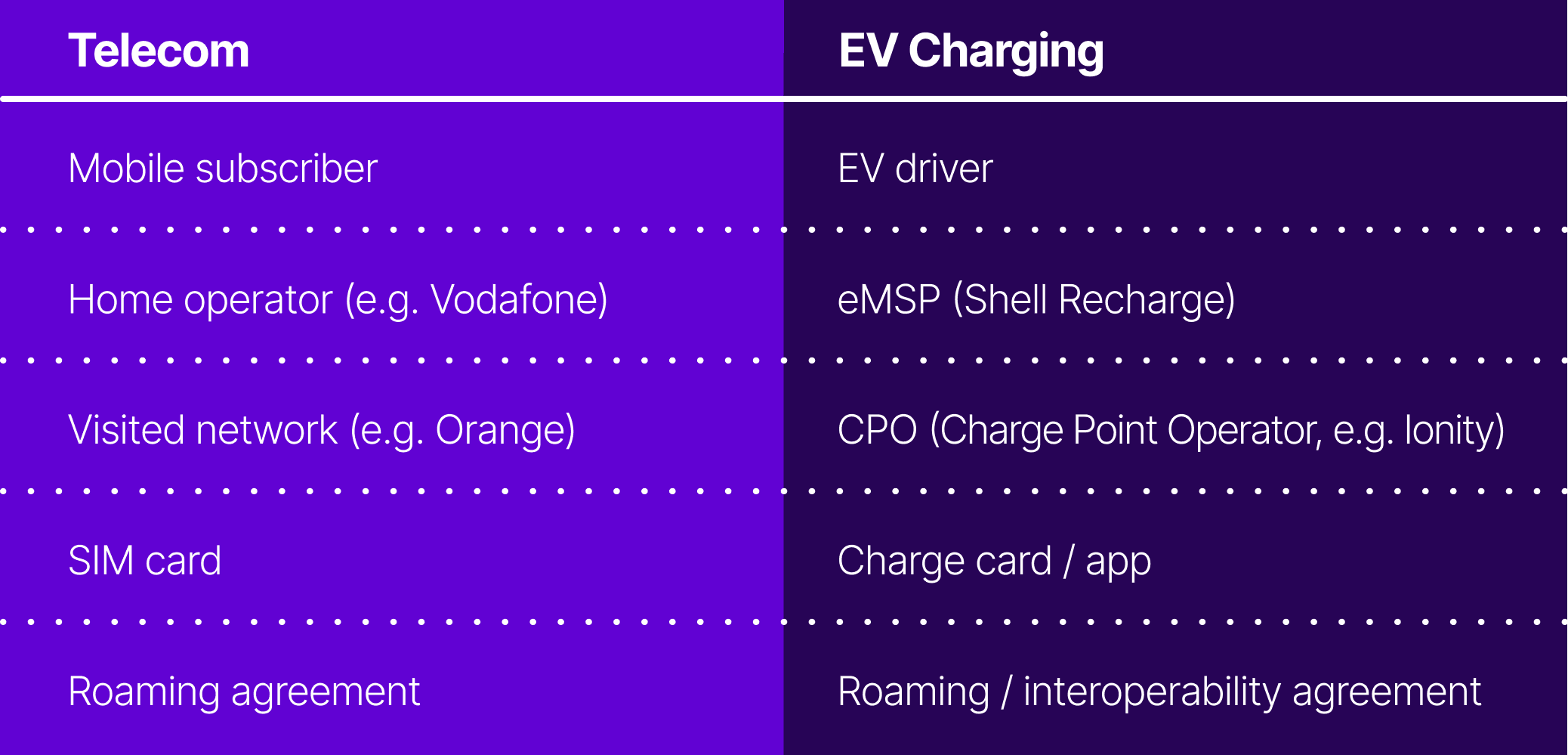
For MSPs, roaming is essential to the value they provide to drivers. While MSPs do not own the charging hardware, the quality of their roaming connections directly determines the charging experience they can offer. A large network with strong roaming coverage provides drivers access to a much larger number of charging locations, allowing them to rely on a single card or app instead of juggling multiple solutions. This broader coverage strengthens the MSP’s value proposition, increases the likelihood that drivers will use their service more often, and ultimately leads to higher session volumes and stronger customer retention.
Without roaming, an MSP’s network would remain limited to only a small number of charging stations. Drivers would quickly run into situations where their card or app simply does not work, forcing them to download other apps or carry additional charge cards. In a market where convenience is critical, this kind of friction quickly reduces trust and relevance. Roaming prevents this fragmentation by connecting different networks, ensuring that drivers can charge across a wide range of stations without needing to think about who operates them.
Why roaming is more than just a connection
Behind the simple experience that drivers see, roaming requires a well-structured system working in the background. Every roaming connection involves multiple technical and operational components that need to function reliably. This includes technical integrations between CPO and MSP platforms and the exchange of real-life data such as:
- Tariff information
- Location data, including status: occupied, charging, available, etc.
- Charge Detail Records (CDRs).
On top of that, invoices must be generated, settlements between partners must be handled, and relationships with roaming partners need ongoing management. In other words, while roaming enables networks to grow and connect with each other, it does include processes and workflows that need to be carried out by people. Think of responding to support requests, investigating why data is not accurate, or manually repairing wrongfully sent sessions. When these processes are well managed, roaming creates a seamless charging experience for drivers. When they are not, it can quickly lead to pricing errors, billing disputes, or failed charging sessions.
Business impact for Mobility Service Providers
For MSPs, roaming also has a direct business impact. Competitiveness closely ties to coverage: the more charging locations an MSP can offer through roaming, the more attractive their service becomes to drivers. A charge card that works across a large and reliable network is far more valuable than one that only works in a limited number of locations. Transparency is equally important. Clear pricing and reliable tariff exchange help drivers understand what they are paying for, which builds trust in the service. When pricing becomes unclear or inconsistent across networks, it quickly affects how drivers perceive the MSP. Finally, settlement processes play a crucial role in long-term stability. Accurate session data, clear invoicing, and reliable reimbursement between partners ensure that transactions run smoothly behind the scenes, allowing MSPs to scale their services without introducing financial risk.
Why it has to be right from day one
Because roaming is no longer a competitive advantage but a basic requirement in the EV charging ecosystem, MSPs need to get it right from the very beginning. Drivers expect their charge card or app to work wherever they go, which means MSPs must rely on a roaming setup that can scale as their network grows and as new partners are added. At the same time, the system needs to support flexible pricing models so MSPs can adapt to different tariffs, markets, and commercial agreements.
Just as important, a well-structured roaming setup ensures reliable billing and reimbursement between partners. Charging sessions must be recorded correctly, invoices need to match the actual usage, and payments must flow smoothly across the network. When these processes work as they should, MSPs can focus on growing their service instead of dealing with operational complexity. In that sense, a strong roaming foundation reduces overhead, supports growth, and helps MSPs deliver a consistent charging experience from day one.
Roaming is no longer optional
In today’s EV charging ecosystem, roaming is no longer optional. For drivers, it is the foundation of a seamless charging experience – the ability to arrive at a station and charge without worrying about networks, providers, or compatibility. For MSPs, this is what enables them to offer broad coverage, maintain trust with their customers, and remain competitive in a rapidly growing market. Without roaming, networks remain fragmented, and the charging experience quickly becomes complicated for drivers.
As the industry continues to scale, the importance of reliable roaming infrastructure will only increase. The MSPs that succeed will be those that build on a roaming setup capable of supporting growth, ensuring transparency, and maintaining stable financial processes behind the scenes. In the end, roaming is what connects the ecosystem – and what makes large-scale EV charging truly possible.
09 September 2024
EV charging infastructure in Europe
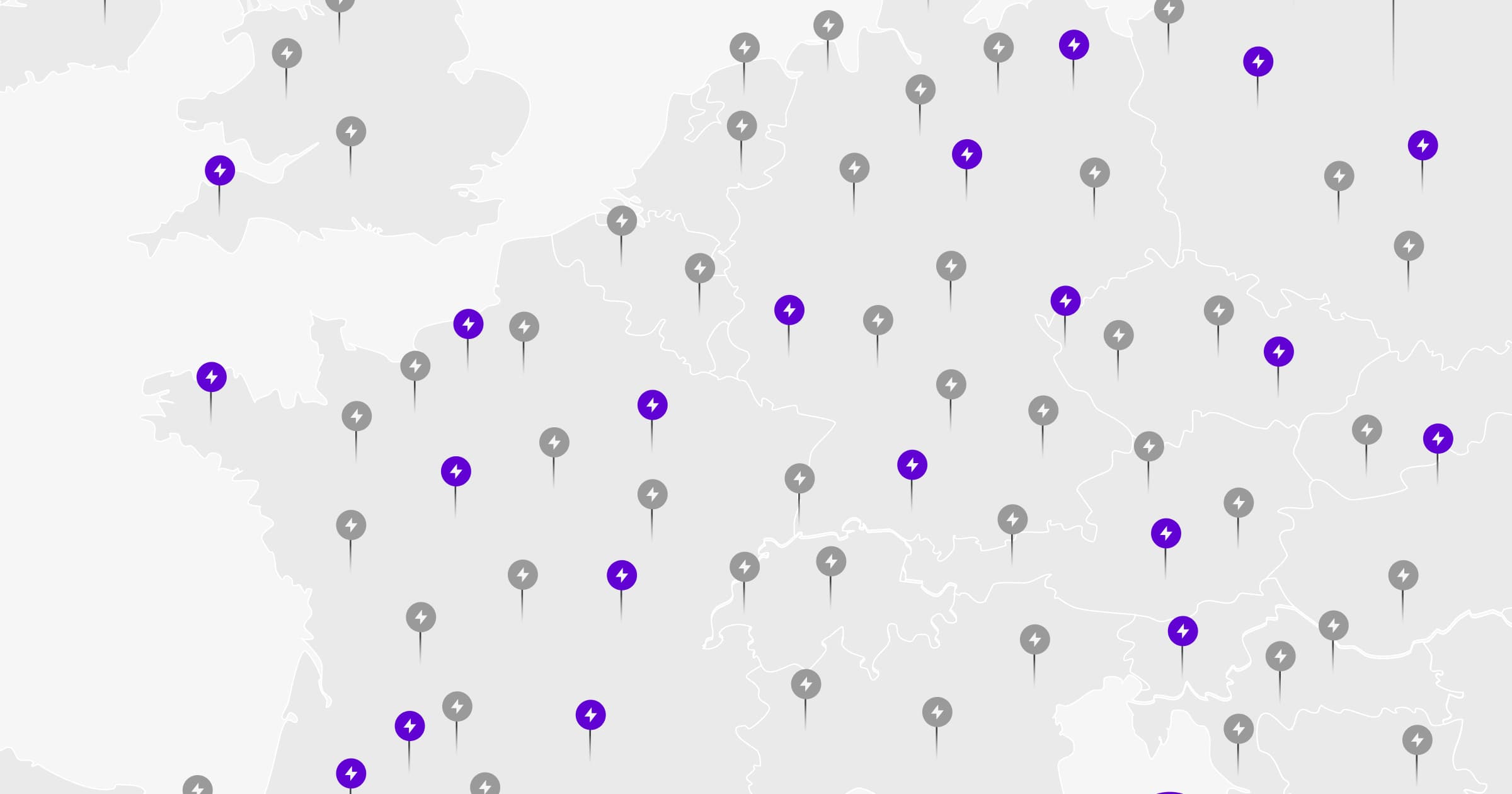
Europe leads in EV charging infrastructure with more than 750.000 charge points. Investments in high-power chargers and more widespread networks are key to supporting the growing EV market across the continent.

09 September 2024
Do you need a charge card (RFID card) for EV charging?
While an EV charge card isn’t required to charge your vehicle in Europe, it offers benefits like cost savings, network access, and convenient billing that make it a smart choice for frequent EV drivers.
16 May 2024
How long does it take to charge an EV?
Charging times will depend on the type of the size of your car’s battery, the type of charging station, and how low your battery is when you start the charge.